

Why Email Deliverability Matters
Every email that lands in spam is a missed opportunity. Whether you’re sending transactional emails, marketing campaigns, or cold outreach, deliverability directly determines your return on investment.
High deliverability means:
- More of your audience sees your message
- Higher open rates and click-through rates
- Better sender reputation over time (a positive feedback loop)
- Lower cost per conversion
Low deliverability means:
- Wasted sending costs on emails nobody sees
- Declining sender reputation (a negative spiral)
- Potential blocklisting that affects your entire domain
What Determines Deliverability
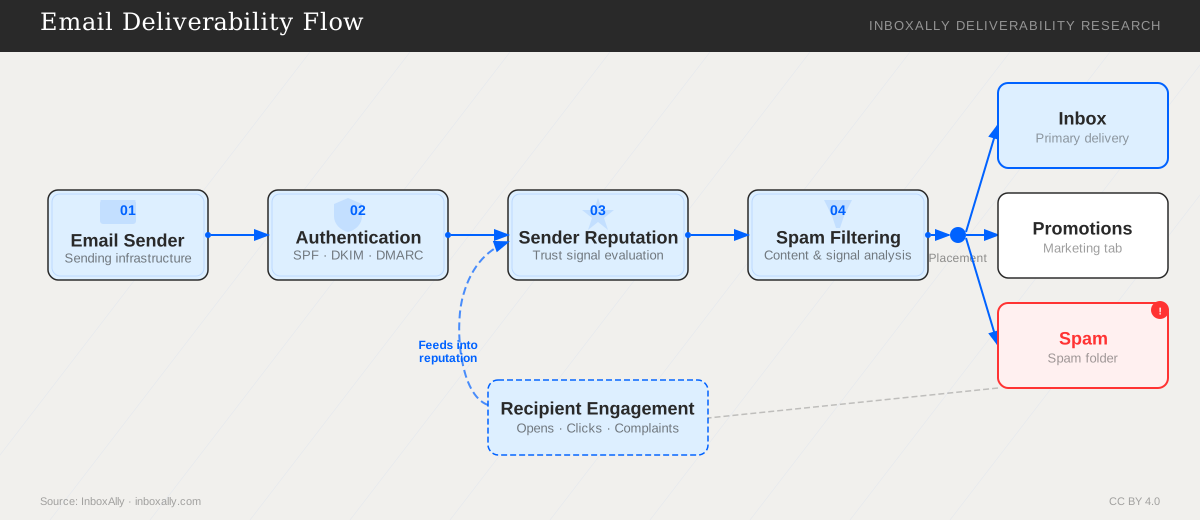
Mailbox providers like Gmail, Yahoo, and Microsoft evaluate several factors:
Sender Reputation
Your sender reputation is a score assigned by mailbox providers based on your historical sending behavior. It’s the single most important factor in deliverability.
Email Authentication
Properly configured SPF, DKIM, and DMARC prove that you are who you claim to be. Without authentication, your emails are far more likely to be flagged as suspicious.
Engagement Signals
Engagement signals — opens, clicks, replies, and time spent reading — tell mailbox providers that recipients want your email. Low engagement tells them the opposite.
Content and Sending Patterns
Sudden spikes in volume, spammy content, and high complaint rates all damage deliverability. Consistent, gradual sending with relevant content supports it.
How InboxAlly Helps
InboxAlly improves deliverability by generating positive engagement signals through seed emails. When InboxAlly’s network of real mailboxes opens, reads, and interacts with your emails, mailbox providers observe genuine engagement — boosting your sender reputation and improving inbox placement over time.
This is especially effective during email warmup when a new domain or IP has no reputation history, or during reputation recovery after a deliverability setback.